

WCS – FAQ
Why Start With the FAQ Page?
To begin with, start by checking our West Coast Swing Vegas FAQ page, where you’ll quickly find clear and reliable answers to the most common West Coast Swing questions. As a result, you’ll save time, feel more confident, and arrive better prepared for your first class or social dance. Moreover, it reduces confusion, builds confidence, and provides a solid understanding of what to expect, ultimately making your dance journey smoother, easier, and far more enjoyable from the very beginning.
WCS Intermediate/Advanced FAQs
Compiled By: MR WCS Vegas
What’s the difference between hitting accents and dancing strictly on counts?
Hitting accents involves responding to dynamic changes in music (rhythmic hits, vocal phrases) rather than just staying on the basic 1-2, 3&4, 5&6 structure.
How do I lead/follow subtle styling without breaking connection?
Keep the connection elastic and communicative; leaders send clear intent with body movement and tension shifts, and followers interpret those with responsive frame adaptation.
What are common mistakes in timing at intermediate levels?
Rushing triple steps, ignoring rolling count patterns, and misunderstanding phrasing can disrupt timing; instead, listen for musical cues and adjust your footwork accordingly.
How do I improve my spins and turns effectively?
Practice pivots, chainé turns, and controlled pirouettes off-floor with drilling, then integrate them with musical phrasing during socials.
When should a leader choose side passes vs. whips vs. tuck variations?
Choose patterns based on musical structure, space, and partner responsiveness — side passes for open movement, whips for connection interplay, and tucks for rhythmic accents.
How do I transition smoothly between patterns in a routine?
Use anchor steps and shared momentum to bridge figures, keeping attention on connection and slot orientation.
How can I dance WCS well to unusual or fast music?
Use “rolling count” and adapt footwork to the beat pattern; make stylistic choices that match musical intensity without losing structure.
What should I focus on when my partner isn’t responsive?
Maintain connection quality, simplify the lead, and create clear intention so the partner can follow confidently rather than guessing.
How can I manage space on a crowded social floor?
Use smooth travel paths along the slot, anticipate others’ movements, and communicate directional changes clearly through connection.
What’s the role of body isolation and upper-body styling?
Practice relaxed upper-body fluidity that complements footwork and follows the music, without blocking connection or creating tension.
How do I practice partner connection without a partner?
Work on core stability, frame awareness, and controlled tension/compression drills along with mirror feedback.
How can I build more confident lead/follow skills socially?
Dance with many partners of different styles; embrace feedback and adapt to varying connection qualities.
What differentiates intermediate vs. advanced technique?
Advanced includes nuanced musical interpretation, refined isolation, and complex pattern combinations with light, clear leading.
How should I warm up before a long social dance?
Start with light stretching, easy slot walking, and rhythmic step drills to prepare muscles and timing awareness before beginning full patterns.
What are effective drills for improving footwork precision?
Practice straight-track walking, quick triple steps, and controlled anchors to tighten timing and clarity.
How can I stay balanced and grounded while traveling down the slot?
Keep your weight centered and use controlled connection to maintain footing during linear movement.
Should I prioritize technique or musicality in competitions?
Balance both — judges often look for grounding, clear movement, and expressive musical interpretation.
How do dancers move up competitive divisions without clear wins?
Consistent skill growth, feedback from coaches, and readiness to handle advanced patterns determine readiness more than single placement.
What’s effective practice structure between social events?
Set goals, drill specific patterns, practice musicality sessions, and review videos to refine.
How do I adapt when dancing with partners of different skill levels?
Simplify patterns when necessary and focus on connection and musical response to stay comfortable for both.
How much does footwork variety matter socially?
Use tasteful variations to enhance musical interpretation while maintaining clear timing — not purely to impress.
What does good frame quality look like?
A stable but flexible frame that communicates intent clearly without stiffness or collapse.
How do I recover from mistakes during a dance?
Stay calm, return to basic rhythm, and let music guide your next move instead of forcing patterns.
How do I keep improving after years of dancing?
Seek feedback, explore advanced workshops, and refine musical interpretation and core technique continuously.
Instructions
Where To Learn WCS
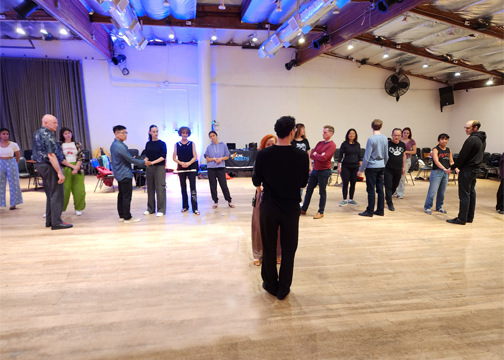
We highly recommend learning from a dedicated West Coast Swing instructor, especially when you’re starting out. Here’s why:
A teacher who focuses exclusively on WCS helps you progress faster because their entire curriculum, techniques, and feedback consistently center on this dance. Moreover, they keep you up to date with current WCS styles and trends, which is especially important since the dance continues to evolve.
In contrast, studios that offer many dance styles often divide their focus across multiple disciplines; consequently, their WCS instruction can feel more general or even outdated. Furthermore, you may gradually pick up patterns or habits from other dances that don’t translate well to WCS, and as a result, this ultimately slows your progress and creates unnecessary confusion.
One big advantage of WCS is its incredible versatility: it can be danced to virtually any style of music, from blues and R&B to pop and electronic. Unlike some dances that require a full-sized ballroom or a specific music style, WCS works comfortably in a small space—specifically a “slot” on the dance floor—yet can also expand to use the entire floor when space allows. This flexibility makes it great for social dancing in many settings.
So, by choosing a dedicated WCS teacher, you’ll get focused, efficient learning that respects the unique characteristics of West Coast Swing and prepares you to dance confidently to a wide range of music and venues. It’s definitely the fastest and most enjoyable way to build a strong foundation!
WCS Videos
Why Learn With WCS Videos?
Using videos to learn West Coast Swing provides clear visual examples, which allows you to study timing, technique, and styling at your own pace. In addition, you can pause, rewind, and revisit steps whenever needed, which helps reinforce muscle memory and gradually builds your confidence. Furthermore, videos spark new ideas, inspire creativity, and actively support your progress between classes and social dances, making your overall learning experience more effective and engaging.
Instructor‘s Video
Beginner Video Series, provides a clear introduction to the basic musical structure of WCS. By following the lessons, you can learn how to recognize beats, counts, and phrasing in different songs. Additionally, it helps you coordinate your movements with the music, improving timing and overall dance confidence.
YouTube Video
See What’s Trending in WCS — Although these videos don’t provide detailed breakdowns, they still offer a simple way to explore popular moves. By watching them, you can quickly spot emerging trends and observe how top dancers interpret the music. Consequently, you gain inspiration and motivation to try new patterns on the dance floor. Furthermore, following these trends helps you connect with other dancers, both socially and competitively. In addition, it keeps you aware of evolving styles and encourages creativity in your own dancing. Overall, these videos guide, inspire, and enhance your West Coast Swing experience step by step.
Music Styles
What Music Do You Like?
One of the defining strengths of West Coast Swing is its flexibility. The dance structure and slot-based connection allow it to adapt to nearly any 4/4 (and even some non-4/4) musical rhythms—so long as the beat is clear.
Blues / Slow Blues
Rooted deeply in WCS history, many dancers start with slow blues—soulful, swung rhythms offering great connection and foundation.
Fast Blues / Big Band Blues
Upbeat, swung “fast blues” music from the big band era remains part of WCS roots.
Jazz / Swing (Classic Jazz)
Occasionally used, especially in its swing rhythm variations—though less common than contemporary sounds.
Top 40 / Pop
Contemporary pop music is one of the most popular genres for WCS today, thanks to its catchy rhythm and freshness.
R and B / Soul
With smooth grooves and relaxed energy, R&B is well-loved in WCS for expressing style and musicality.
Funk / Disco
Funky bass lines and rhythmic backbeats inspire creative styling and “disco-like” movement in WCS.
Country / Country Swing
Country music—with its “boom–tick” rhythm—has become a recognized genre in WCS, leading to specialized sub styles like “bar coast swing”.
Acoustic / Lyrical / Melodic
Softer, acoustic styles that emphasize melody and lyrical expression are great for smooth, expressive dancing.
Electronic / Techno / EDM
High-energy electronic beats, remixes, and techno tracks are being embraced more—especially among dancers pushing tempo and energy.
Dubstep / Fast Electronic
While less common, dubstep and other fast-paced electronic genres are occasionally used—mostly by adventurous dancers.
Rock / Hard Rock
Some WCS dancers experiment with rock—even hard rock—if the beat is clear. Success depends heavily on crowd and DJ approach.
Classical / Unconventional
The community has even danced WCS to classical music (like Mozart) in fun, all-skate settings, showcasing its versatility.
Practice Music List
Let’s Get Started
Provided By: MR WCS Vegas
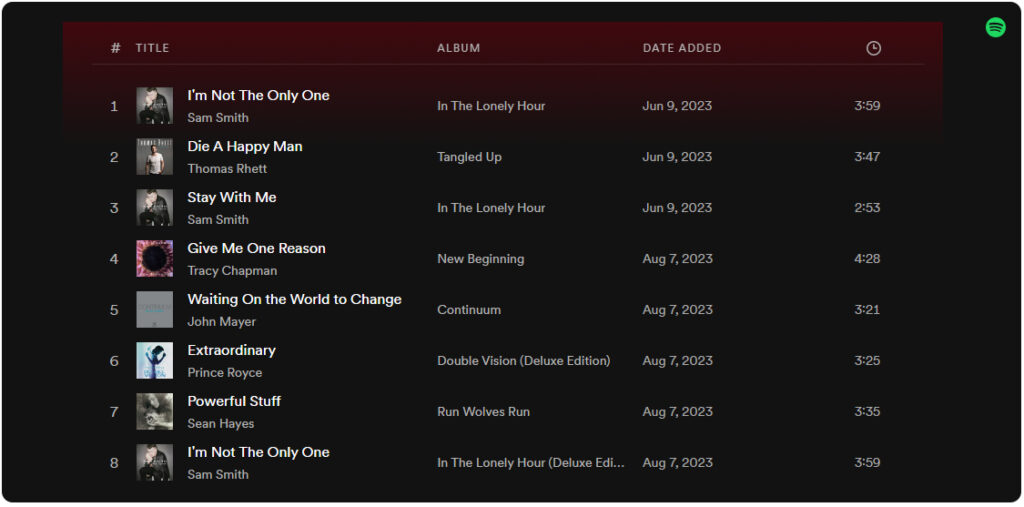
We’ve put together a Spotify playlist to help you get started. This takes the guesswork out of finding suitable music, and every track features a clear, steady downbeat at a comfortable tempo. It’s slow enough to help you hear the rhythm easily and feel the movement of West Coast Swing in your body.
Teachers
What To Look For
Specialized Expertise: They have deep knowledge and refined skills in WCS, ensuring you learn authentic techniques and styles.
Focused Curriculum: Lessons are tailored specifically to WCS, allowing for more efficient and effective learning without distractions from other dance forms.
Up-to-Date Trends: Such a teacher is likely to be current with the latest moves, music, and competition standards in the WCS community.
Community Connections: They often have strong ties within the WCS dance community, providing opportunities for networking, social dancing, and events.
Community Connections: They often have strong ties within the WCS dance community, providing opportunities for networking, social dancing, and events.
Personalized Feedback: With a narrow focus, the teacher can give detailed and precise feedback to help you improve quickly.
Performance Preparation: They can prepare you for WCS competitions and showcases, helping you develop both technique and stage presence.
Consistent Progression: A focused teacher can design a clear progression path from beginner to advanced levels specifically for WCS.
Motivation and Passion: Their sole dedication to WCS often translates into greater enthusiasm and motivation that inspires students.
Tailored Social Skills: WCS has unique social dance etiquette and partnering skills that a dedicated teacher can effectively impart.
World swing dance council is an organization to inspire swing dancing around the world and guide events in creating the ideal environment to promote community growth. WSDC is a non-profit organization focused on promoting and growing swing dance, by honoring the past, supporting the present, and developing the future. Providing resources to educate, expand, and connect the swing dance community. Strengthening, guiding and maintaining the integrity of WSDC Registry Events. Their website is at https://www.worldsdc.com